Flôr de Sal
Sea Salt Flakes
The flower of the salt. Delicate, irregular flakes lifted from the very surface of the brine before they can dissolve back into it. For finishing, never for boiling.
Between harvests. Back when the pans are worked again.
Salt Flakes Company / Aveiro, Portugal
Hand-harvested in Aveiro, Portugal, from salt pans worked since the 10th century.
Harvested by handNo machinery touches the pans
UnrefinedNo additives, no bleaching
Independently analysedUKAS-accredited public analyst
Stocked in the UKDispatched from Essex
The harvest
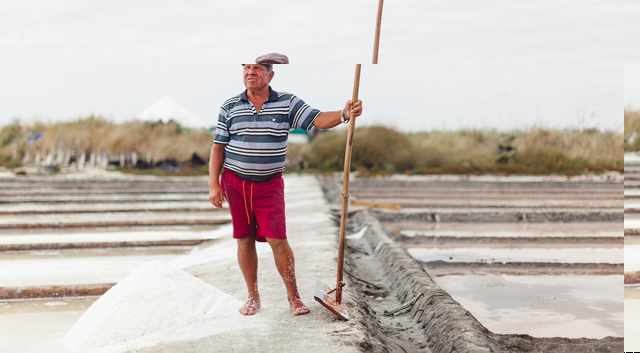
When we say hand-harvested, we mean exactly that. Our salineiros wade into the salt pans of Aveiro and lift each batch of crystals from the surface of the brine by hand, using wooden tools their families have used for generations.
Atlantic water enters the shallow clay pans of the Ria de Aveiro and is left to the sun and the wind. As it evaporates, the brine thickens until salt begins to form on the surface.
The salineiro walks the walls between the pans and scrapes only the top layer, before the crystals grow heavy enough to sink. It is slow, physical work, done the same way it has been done here since the 10th century.
It is packed as it comes out of the pan. Naturally moist, never washed, never bleached, nothing added. What reaches your kitchen is what the sea left behind.
Flôr de Sal
The flower of the salt. Delicate, irregular flakes lifted from the very surface of the brine before they can dissolve back into it. For finishing, never for boiling.
Between harvests. Back when the pans are worked again.
Sal Grosso
The working salt of the Portuguese kitchen. Heavier crystals for seasoning through cooking, for brining, for crusting whole fish.
No machinery ever touches the pans.
Ria de Aveiro, Portugal
Independently analysed
Our salt was submitted to Staffordshire Scientific Services for analysis by a UKAS-accredited Public Analyst. Mercury, lead, cadmium and arsenic all came back at or below the limit of detection.